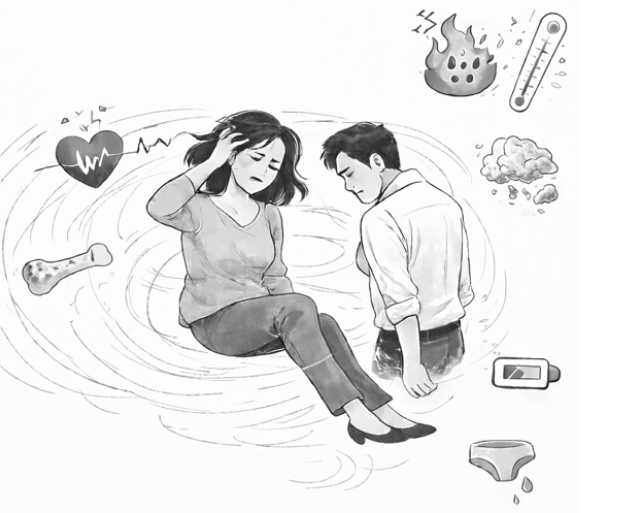
Although experiences may vary, many people notice physical and mental changes as they enter their 40s. Symptoms such as feeling tired easily, lighter sleep, easily irritated, low motivation, new aches or discomfort throughout the body. These changes can sometimes cause anxiety, making people worry if they may have an illness or if something is wrong with their body. However, these symptoms may be related to menopause or andropause.
When people hear the term “menopause,” they often associate it only with women, but men can also experience age-related hormonal changes, called andropause. Both are related to hormonal changes that occur with aging, although their symptoms can appear somewhat differently.
For women, symptoms are often more noticeable, including hot flashes, excessive sweating, headache, shoulder stiffness, joint pain, insomnia, irritation, anxiety, and mood swings. Physical changes may also occur such as increased body fat and decreased bone density. These are mainly related to a decline in estrogen, which plays an important role in physical regulation, emotional stability, bone density, and maintaining autonomic nervous system balance. As estrogen decreases, its effects can be felt throughout the body.
In contrast, symptoms of male menopause are often less obvious and may dismissed as simply “getting older” or “normal fatigue.” However, many men experience decreased energy, lower motivation, depressed mood, and reduced vitality. This is often related to a decline in testosterone, a hormone that supports not only muscle and bone maintenance, but also motivation, confidence, and emotional stability. As testosterone levels decrease, men may notice a general lack of drive or reduced enthusiasm in daily life.
Another important factor in menopausal symptoms is imbalance in the autonomic nervous system. Hormonal changes can affect the autonomic regulation, contributing to symptoms such as irritability, insomnia, headaches, shoulder tension, heart palpitations, and low mood. In other words, menopause and andropause are not simply about hormone decline – they involve whole body changes influenced by the interaction between hormones and the autonomic nervous system.
For individuals experiencing severe symptoms that interfere with daily life, hormone replacement therapy may be worth discussing with a medical provider. For those whose symptoms are milder but still affect daily comfort and well-being, and who prefer a more natural approach, we recommend chiropractic care.
At our clinic, chiropractic treatment focuses on adjusting the upper cervical spine to improve spinal alignment and promote smoother nervous system function. By restoring balance to the spine and nervous system, we aim to support a more stable autonomic nervous system. Because modern lifestyles often place people in environments that contributes to autonomic imbalance, we especially recommend chiropractic care as part of routine wellness management for individuals going through midlife hormonal changes.
In addition, appropriate supplements may also help ease menopausal symptoms. At our clinic, we recommend supplements tailored to individual’s needs-for example, products designed to support hormonal balance for women or vitality and physical conditioning for men. These can be incorporated naturally as part of daily wellness support.
We also offer a combination of treatments including stretch release therapy, stretch training therapy, gua sha, cupping, and massage, allowing us to tailor care to each patient’s condition and symptoms. For example, one female patient in her mid-40s who was experiencing joint pain in her right fingers and wrist related to menopause reported noticeable pain relief after gua sha treatment. She currently continues monthly maintenance care combining gua sha and chiropractic treatment.
Menopause and andropause vary greatly from person to person in both timing and symptom severity. Some individuals experience significant discomfort that affects daily life, while others notice very few changes. For this reason, it is important to find care that is appropriate for your individual condition. If you are experiencing concerning symptoms or changes in your body, please do not hesitate to consult our clinic. We are happy to work with you to find and recommend treatment options best suited to your needs.
Dr. Yoshiro Yajima Upper Cervical Chiropractor